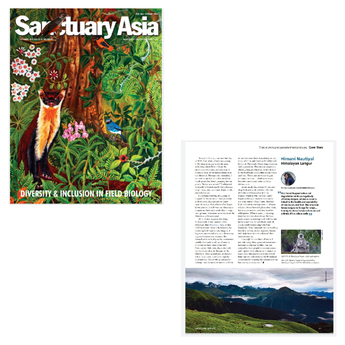
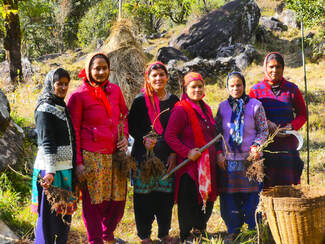
I’m Dr. Himani Nautiyal, a biological anthropologist, conservationist, and postdoctoral fellow at Howard University in Washington, D.C. I was born and raised in a small Himalayan village, where life revolved around forests, animals, and stories passed down through generations. Those early years taught me that the line between humans and nature is thinner than most people think. It’s what set me on my path to study how we can coexist with the wild, not apart from it.
For more than a decade, I have worked across some of the most remote and breathtaking mountain landscapes on Earth, combining ecology, anthropology, and conservation science to understand how communities and wildlife adapt in the face of climate change and biodiversity loss. My research isn’t confined to data sheets or field notebooks; it’s about people, relationships, and finding real solutions that honor both culture and ecology.
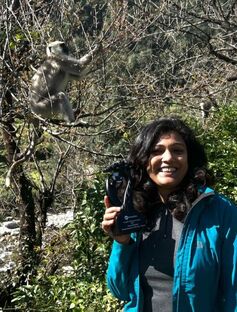
In 2014, I founded the Himalayan Langur Project, a long-term initiative built on science, collaboration, and trust. Through this work, we study the behavior and ecology of Himalayan langurs while engaging with local communities to promote conservation rooted in respect and reciprocity. What began as a small research effort has grown into a model for how science can serve both nature and society.
Beyond research, I’m deeply committed to storytelling. Inspired by Jane Goodall’s belief that science must be accessible to everyone, I share my work through films, talks, and educational programs. My award-winning documentary Tradition in Balance captures the resilience of Himalayan communities living in the shadow of climate change, while my conservation outreach with women and children continues to shape the next generation of local stewards.
At the center of it all is a simple truth: conservation only works when both people and wildlife can thrive. My goal, whether in the high Himalayas or in a classroom in D.C., is to bridge science with lived experience and help reimagine a future where knowledge, culture, and compassion move in harmony.
For more than a decade, I have worked across some of the most remote and breathtaking mountain landscapes on Earth, combining ecology, anthropology, and conservation science to understand how communities and wildlife adapt in the face of climate change and biodiversity loss. My research isn’t confined to data sheets or field notebooks; it’s about people, relationships, and finding real solutions that honor both culture and ecology.
In 2014, I founded the Himalayan Langur Project, a long-term initiative built on science, collaboration, and trust. Through this work, we study the behavior and ecology of Himalayan langurs while engaging with local communities to promote conservation rooted in respect and reciprocity. What began as a small research effort has grown into a model for how science can serve both nature and society.
Beyond research, I’m deeply committed to storytelling. Inspired by Jane Goodall’s belief that science must be accessible to everyone, I share my work through films, talks, and educational programs. My award-winning documentary Tradition in Balance captures the resilience of Himalayan communities living in the shadow of climate change, while my conservation outreach with women and children continues to shape the next generation of local stewards.
At the center of it all is a simple truth: conservation only works when both people and wildlife can thrive. My goal, whether in the high Himalayas or in a classroom in D.C., is to bridge science with lived experience and help reimagine a future where knowledge, culture, and compassion move in harmony.
Latest news
Traditions in Balance Receives International Awards
My independent film has been honored globally for portraying the delicate relationship between Himalayan communities, culture, and climate change.
Latest publications
- Predatory Dogs as Drivers of Social Behavior Changes in the Central Himalayan Langur (Semnopithecus schistaceus) in Agro-Forest Landscapes. https://doi.org/10.3390/biology13060410
- Female social dynamics as viewed from grooming networks in the Central Himalayan Langur (Semnopithecus schistaceus). https://doi.org/10.1002/ajp.23655
Conservationist of the Year Award by We Naturalists
Latest project: 2023-2027
Towards making Howard University a hub for basic cultural anthropological research related to cultural and biodiversity conservation. Funded by the National Science Foundation, USA.
|
Contact Details Dr. Himani Nautiyal Email: [email protected] Rui Diogo Lab, Washington, DC, USA ResearchGate profile Google Scholar profile National Geographic profile |
Educational blog postings |
|
|